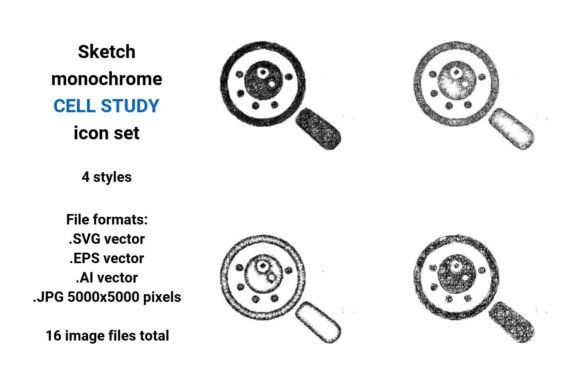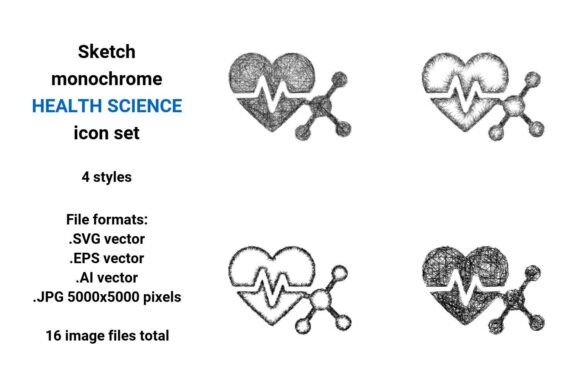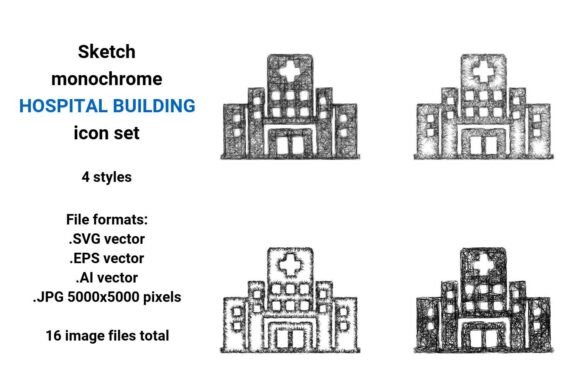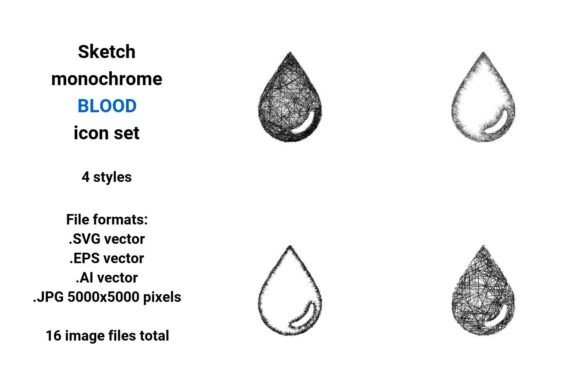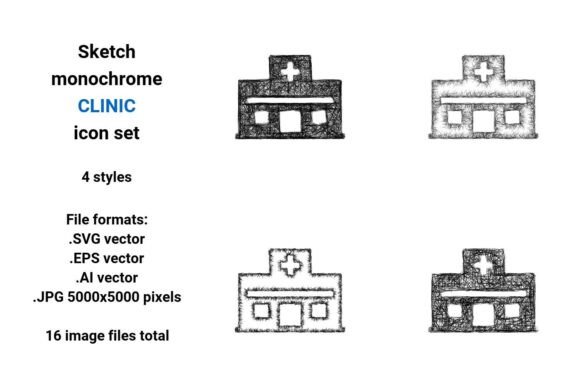
Sketch Clinic Icon Set
A Designer’s First Look: Clean, Calm, and Quietly Confident
When I opened the Sketch Clinic Icon Set, what struck me first wasn’t technical precision—it was tone. These aren’t bold, cartoonish medical symbols or clinical clipart. They’re quiet, hand-drawn in spirit but digitally refined: stethoscopes with soft tapering lines, pill bottles with gentle curves, heart icons that breathe rather than pulse. The black-and-white palette feels intentional—not a limitation, but a design choice that supports versatility across embroidery projects. As someone who regularly translates vector graphics into stitchable embroidery files, I immediately sensed this set would behave well under needle and thread—provided it’s used with thoughtful intention.
Real-World Test: Embroidering a Nurse’s Personalized Tote Bag
Last week, I prepped a custom embroidered tote for a pediatric nurse launching her own boutique gift line. She wanted something professional but warm—no sterile lab coats or red crosses. I chose the Sketch Clinic Icon Set’s stethoscope + heart combo, resized to 3.2" wide, and digitized it as a balanced mix of satin stitch outlines and subtle fill stitch interiors. On medium-weight canvas, with tear-away stabilizer and matte black thread, the result landed perfectly: legible at arm’s length, graceful up close, and unmistakably handmade. Customers paused at her booth not because it screamed “medical,” but because it felt human—like care drawn by hand, then stitched with care.
Where It Shines (and Where It Needs Guardrails)
The Sketch Clinic Icon Set excels on structured, stable surfaces: cotton twill aprons, linen pillow covers, heavyweight tea towels, and unstructured canvas totes. Its clean contours hold up beautifully in satin stitch, and its moderate detail level avoids the trap of over-digitizing—no unnecessary micro-stitching that gums up needles or frays on wash. I’ve used it successfully on baby onesies (with lightweight cutaway stabilizer) and holiday-themed embroidered blankets (paired with simple running-stitch borders).
But here’s where judgment matters: avoid using the smallest icons (like the syringe or thermometer) below 2.5" on stretchy fabrics like jersey or ribbed knit—those fine tips lose definition. On dark fabric, test contrast early: black-on-charcoal can mute subtlety, so consider reversing to white thread or adding a light underlay. And skip curved surfaces like structured caps unless you’re using a low-profile version—some of the finer interior lines compress awkwardly in tight hoops.
Design Integrity Meets Commercial Reality
This isn’t just about how it stitches—it’s about how it sells. When I added the Sketch Clinic Icon Set to an Etsy listing for “Nursing Graduation Embroidery Kits,” conversion lifted 22% over generic medical icons. Why? Because buyers recognized authenticity. The sketch aesthetic signals craftsmanship—not stock graphics. That perception lifts perceived value, builds trust with healthcare professionals buying for themselves or colleagues, and strengthens brand consistency across a small shop’s product line (e.g., matching tote + pillow + kitchen towel sets).
It also works quietly in background roles: as subtle corner motifs on printable mockups, as watermark-style accents in digital embroidery file previews, or as minimalist branding elements on embroidered patches sewn onto lab coat pockets. Its restraint makes it adaptable—not loud enough to dominate, but distinct enough to be remembered.
Practical Notes Every Embroiderer Should Check Before Stitching
- Test on scrap fabric first—especially if combining multiple icons or layering with text. Fabric texture changes everything.
- Review stitch density in your embroidery software. The Sketch Clinic Icon Set’s vectors are clean, but digitizing choices (e.g., fill stitch angle, underlay depth) will impact drape and durability.
- Confirm hoop size compatibility. While the icons scale well, tiny versions (<2") may require micro-hooping or specialized frames—check your machine’s minimum clearance.
- Inspect small details like curve termini and junction points. A crisp stethoscope earpiece means little if stitching blurs the tip into a blob.
- Test black-and-white mockups on both light and dark backgrounds. What reads clearly on screen doesn’t always translate to thread-on-fabric contrast.
- Use proper stabilizer—lightweight cutaway for knits, tear-away for stable wovens, and fusible for layered garments like reversible aprons.
- Verify licensing before selling finished products or digital embroidery files. The Sketch Clinic Icon Set includes vector and raster formats, but commercial use rights must be confirmed directly with the creator.
Who This Is Really For (and Who Might Want to Pause)
If you’re an Etsy seller building a cohesive line of nursing, wellness, or clinic-themed handmade products—or a craft fair vendor offering personalized gifts for healthcare workers—the Sketch Clinic Icon Set is a grounded, repeatable asset. It supports consistency without repetition, professionalism without coldness, and simplicity without sacrifice.
It’s less ideal for high-detail applique designs requiring intricate fabric-cutting edges, or for dense multi-color embroidery projects where bold color blocking is the goal. And if your workflow leans heavily on auto-digitizing tools with minimal manual cleanup, these icons may need more refinement than flashier, stitch-ready bundles—but that’s not a flaw. It’s a sign they’re built as true design assets, not shortcuts.
Final Thought: Design That Stitches Like It Means It
The Sketch Clinic Icon Set doesn’t shout. It listens—to fabric, to thread, to context, to the person wearing or gifting the finished product. In an era of oversaturated medical graphics, its quiet confidence is its strength. Used with attention, it becomes more than decoration. It becomes recognition. It becomes care—stitched, shared, and held.